



Eosinophilic proliferative panostitis in guinea pig
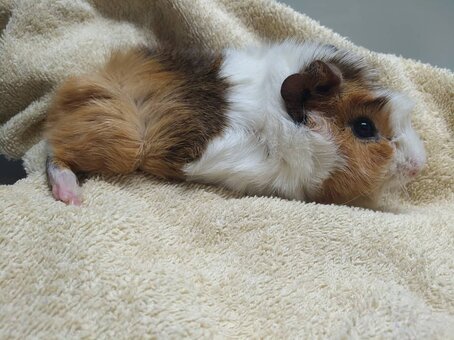
Eosinophilic proliferative panostitis (in a guinea pig 6 months) is a disease that occurs in babies at the age of 3–12 months and manifests itself with lameness and overgrowth of bone tissue. Currently, the etiology of panostitis is not fully established, in most cases the etiology is associated with a genetic factor. It has been found that males get sick more often than females.
The pathogenesis of panostitis is characterized by the occurrence of spontaneous activity of fibroblasts in the periosteum and the inner lining of the medullary canal. Long tubular bones contain red bone marrow, located between the bone bars of the cancellous substance, as well as yellow bone marrow, which is represented by reticular tissue with fatty inclusions and fills the bone marrow canals of the tubular bones. There are no blood-forming elements in the yellow bone marrow, however, with large blood loss, it can be converted to red and included in hematopoiesis.
As a result of the uncontrolled activity of fibroblasts, the yellow bone marrow is replaced by fibrous tissue, which is eventually replaced by coarse fibrous bone tissue. As a result, bone inclusions are formed in the cavity of the medullary canal, sometimes filling the canal space almost completely. Against the background of the disease, the number of eosinophils in the blood increases sharply; anorexia and fever may occur. The pressure along the axis of the affected limb causes a painful reaction.
In this individual (male), moderate acromegaly of the femur and the proximal part of the shin bones is manifested symmetrically, and tends to expand the growth of bone tissue further. (Not a typical case, arose after an injury to the sacral spine, two weeks later ... maybe a coincidence). It turns out symptomatic therapy, as well as corticosteroids.